


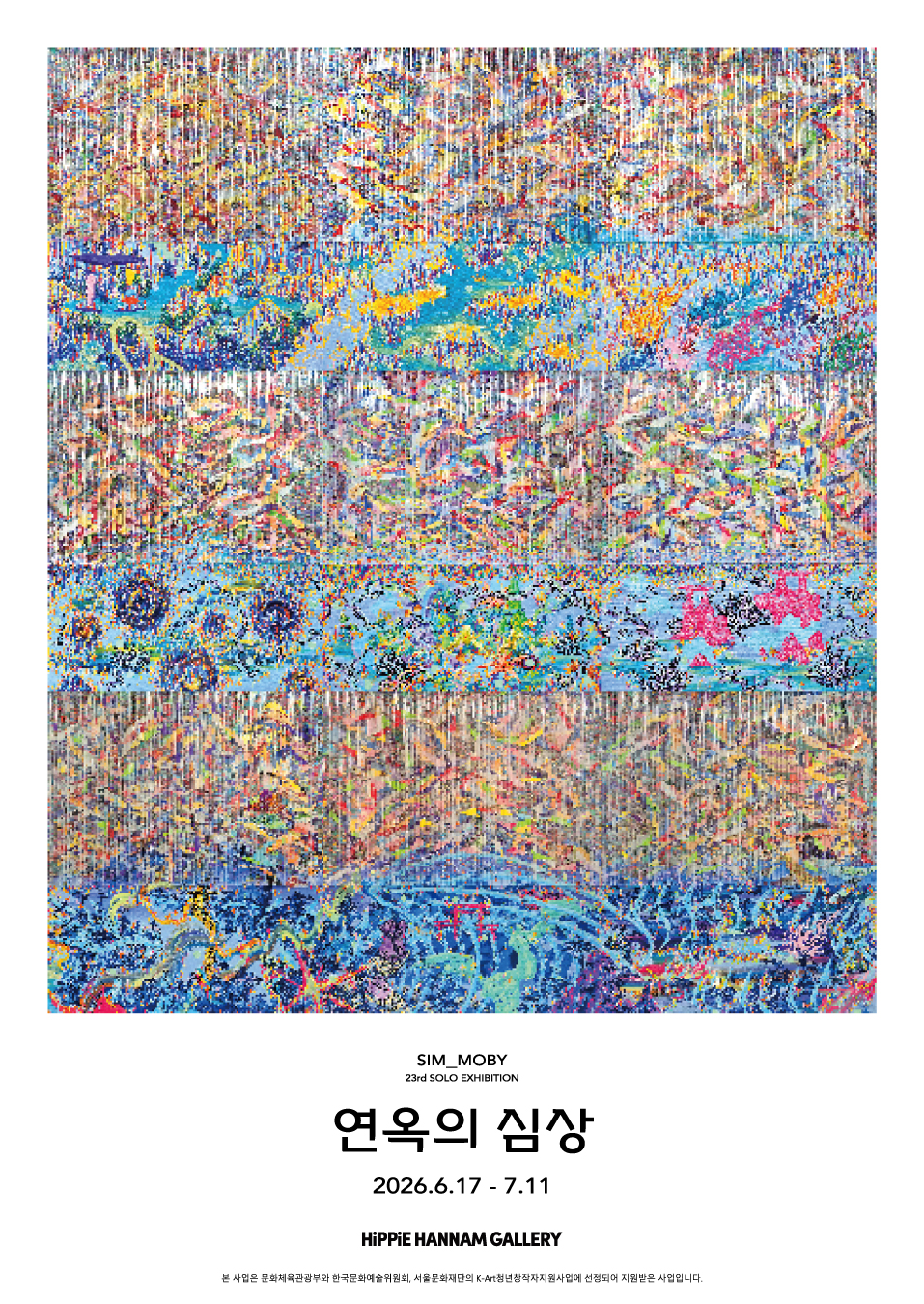
연옥의 심상
SIM_Imagery
심모비 SIM BOBY
2026. 06. 17 ~ 07. 11
Introduction 서문
보이지 않는 세계를 어떻게 그릴 수 있을까.
그것을 직접 묘사하는 것이 불가능하다면, 우리에게 남는 것은 그 세계가 마음속에 남긴 흔적뿐이다. 심모비의 작업은 바로 그 흔적, 감각과 인식 사이에 생겨나는 '심상(心象)'을 붙잡으려는 오랜 시도이다.
작가의 세계관은 하나의 깨달음에서 출발한다. "하나의 생명을 낳는 것은, 하나의 죽음을 낳는 것과 같다." 삶과 죽음이 서로를 전제하는 이 순환 안에서, 심모비는 연옥을 단순히 천국과 지옥 사이의 중간 지대로 보지 않는다. 그에게 연옥은 태어남 이전에 존재하는 공간, 생과 사의 섭리가 아직 작용하지 않는 유예의 장소이다. 증명되지 않고, 완전히 인식될 수도 없는, 그래서 언제나 불투명하게만 감각되는 세계인 것이다.
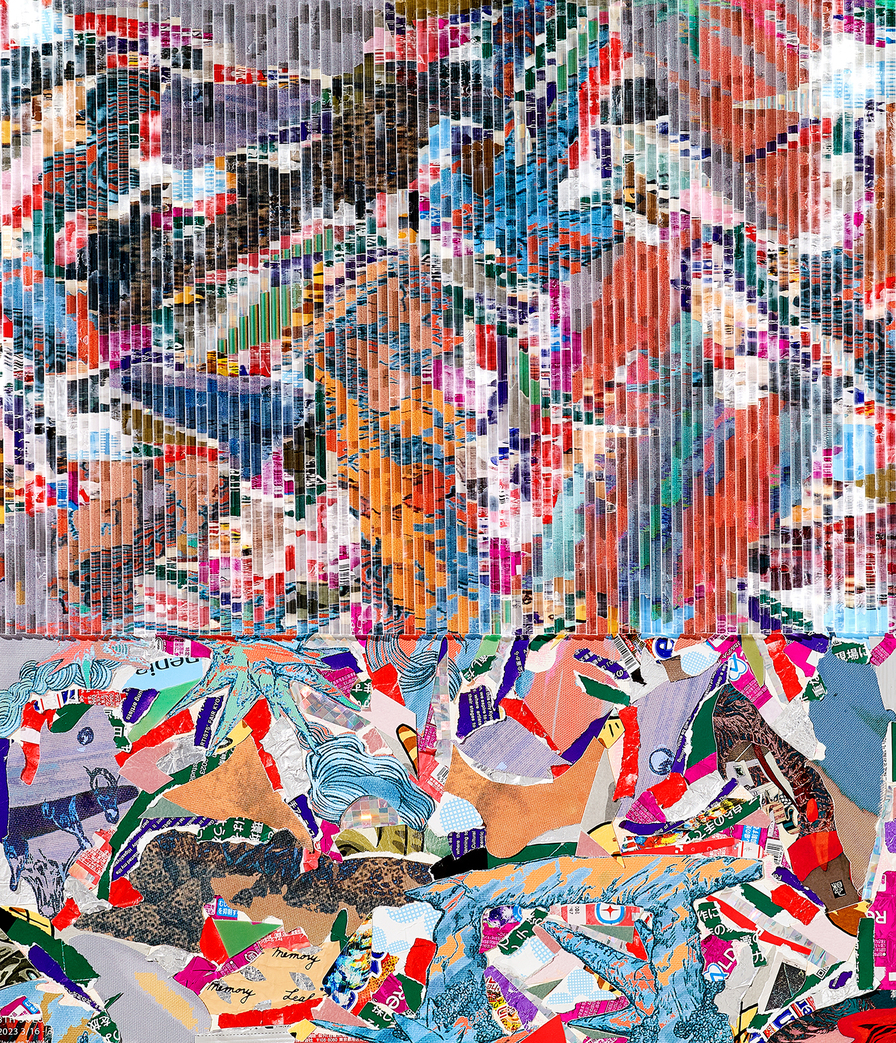
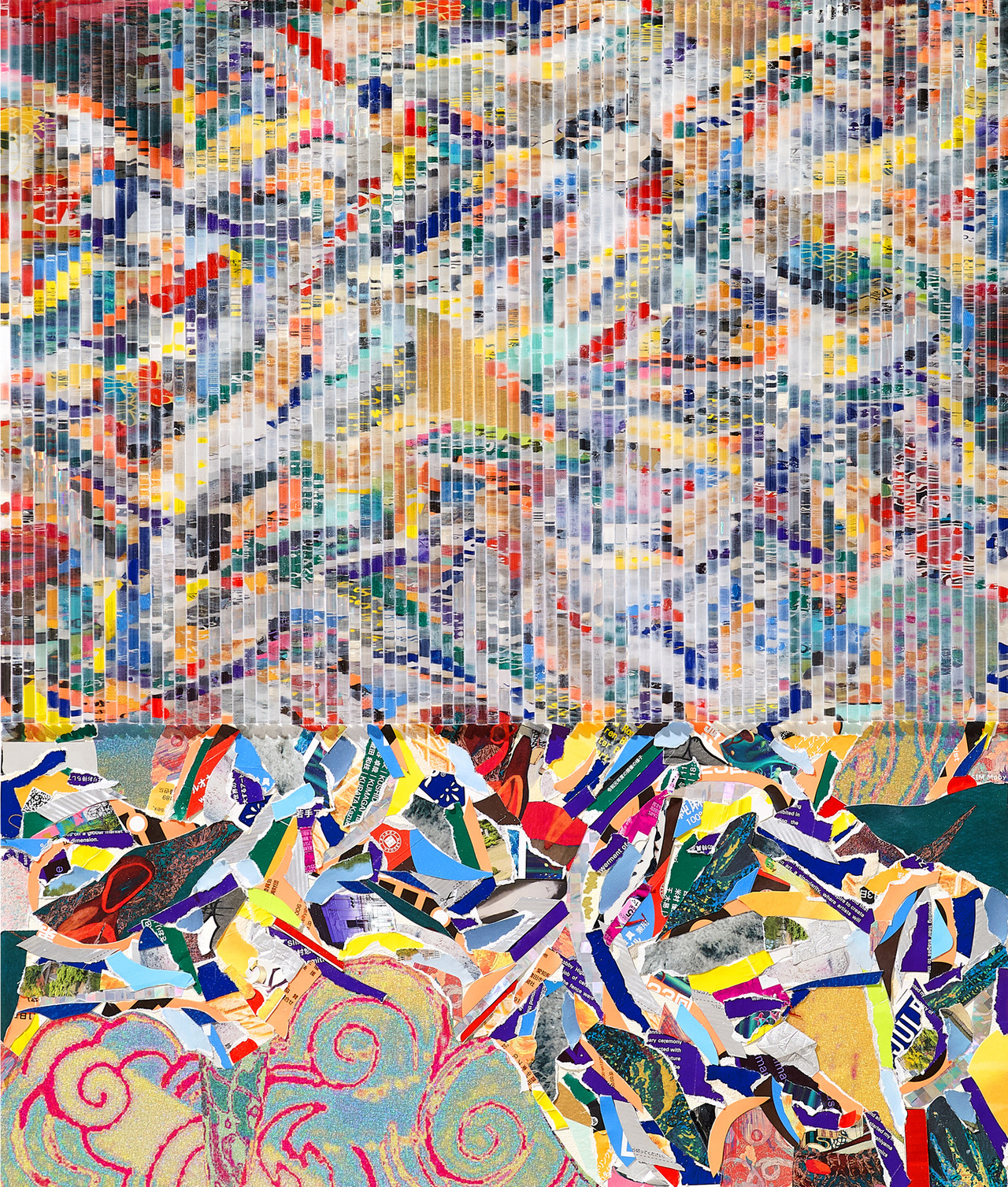
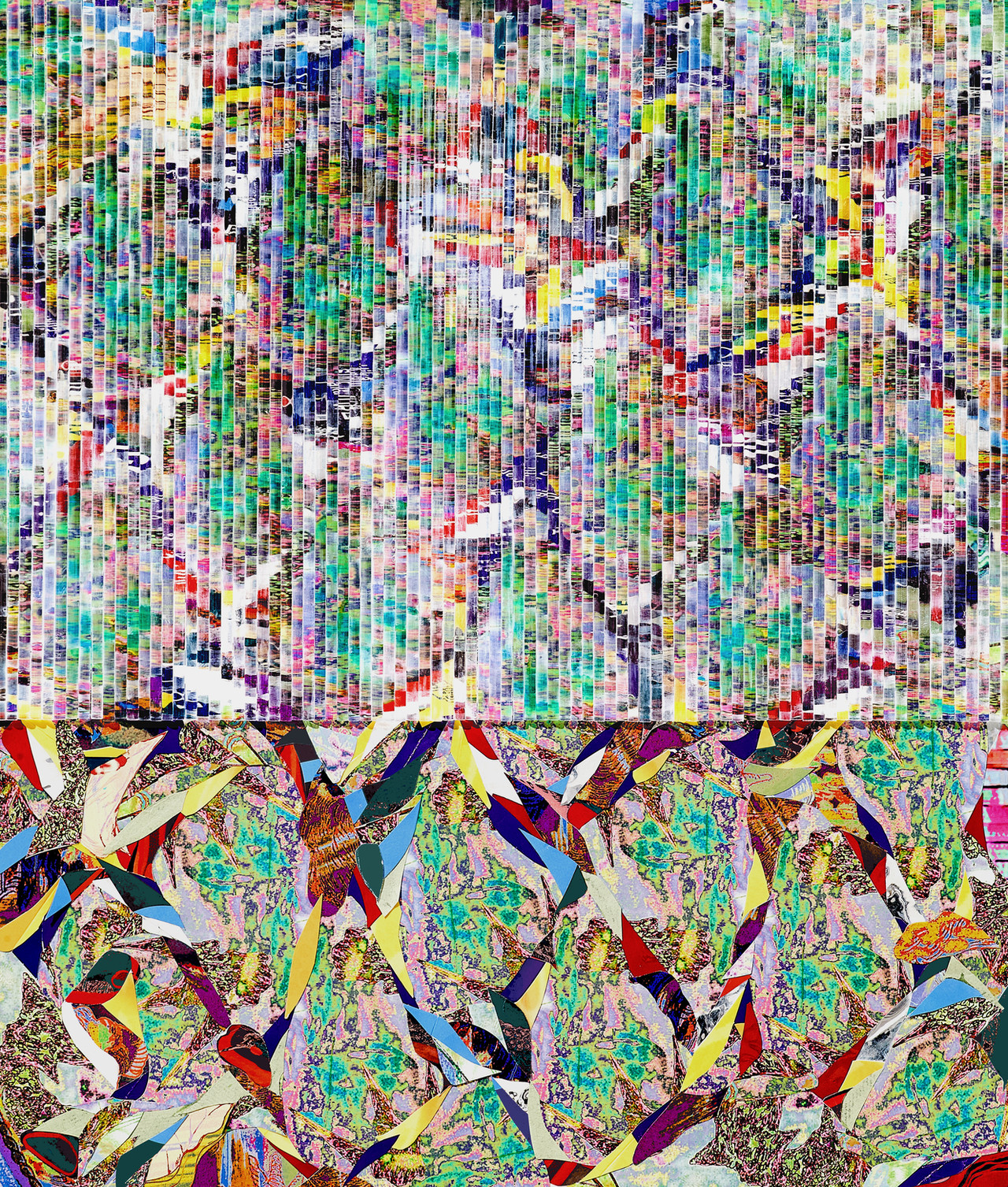
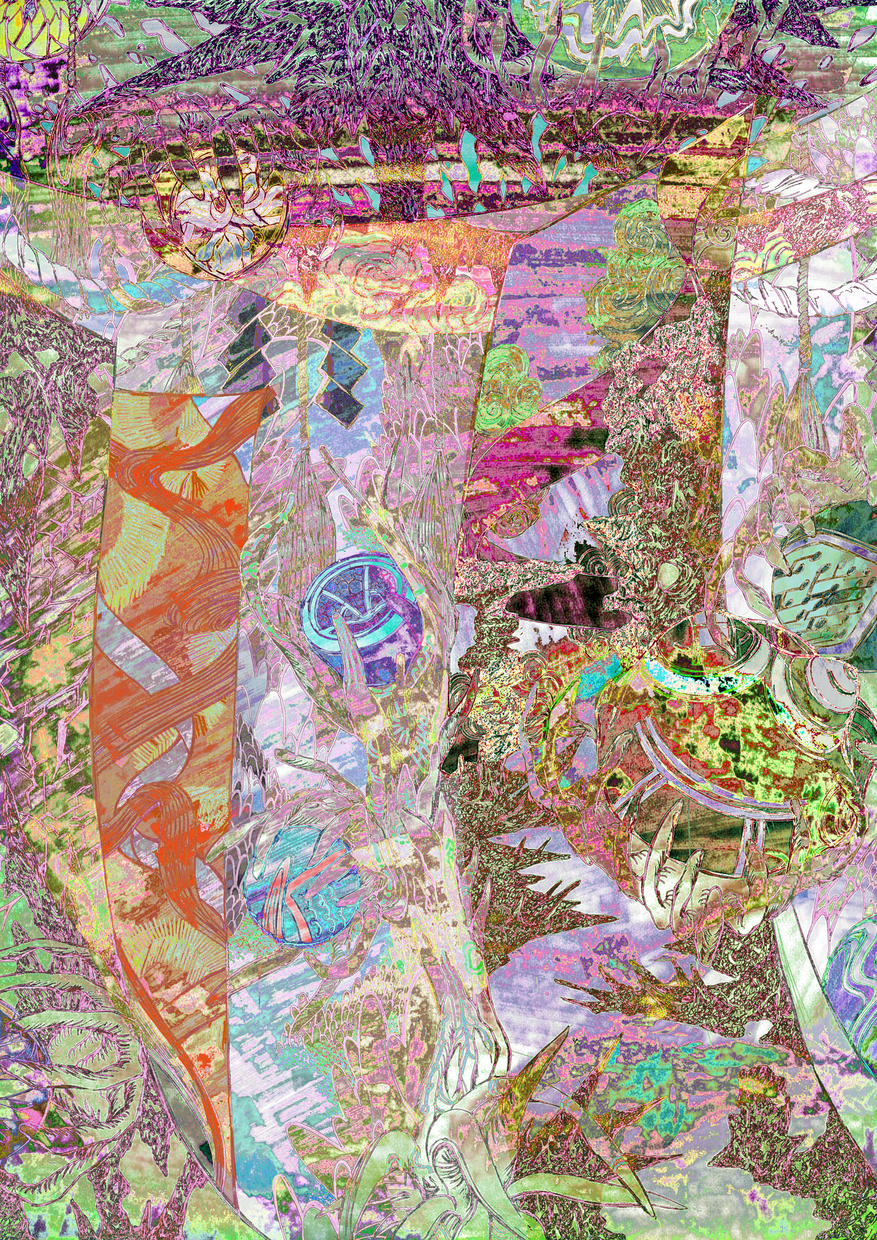
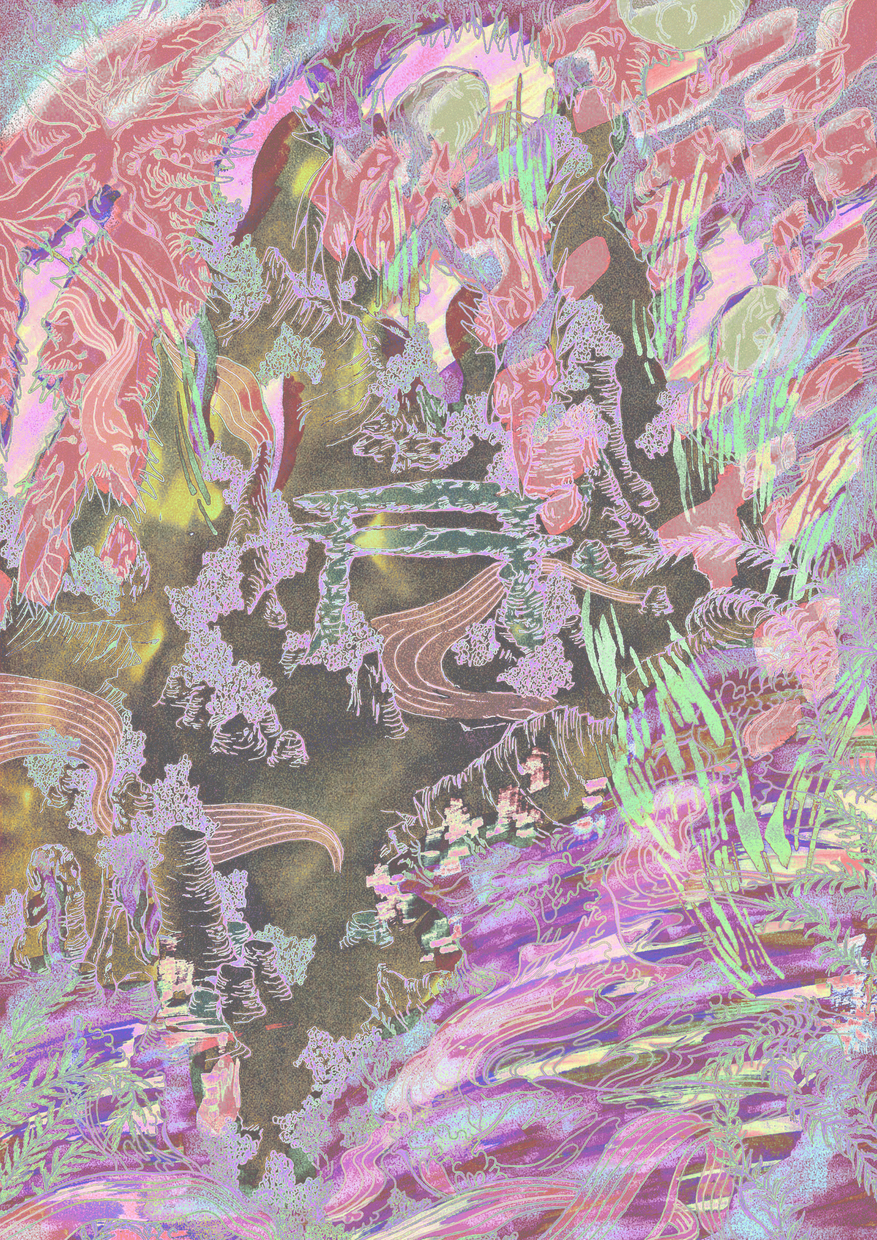
이러한 연옥의 속성은 작가의 재료적 선택과 긴밀하게 맞닿아 있다. SIM_Purgatory 프로젝트의 시리즈 작업인 《SIM_Opacity》에서 심모비는 자신의 디지털 드로잉을 캔버스 위로 불러들인다. 작가의 정체성이 깃든 디지털 이미지는 인쇄되어 캔버스 위에 붙여지고, 작가의 손을 거쳐 다시 조각나고 재배치되며 콜라주의 형태로 새로운 연옥의 공간을 이룬다. 한 번의 생으로 끝나지 않고 다른 몸을 빌려 다시 태어나듯, 하나의 작업은 해체되어 또 다른 작업의 재료이자 생명이 된다. 그 위를 덮는 아크릴 스틱의 층은 조명의 각도와 보는 위치에 따라 서로 다르게 굴절되며, 화면을 한 번에 온전히 드러내지 않는다. 이는 마치 연옥이 설명되는 것이 아니라, 감각되는 방식 그 자체로 존재함을 나타낸다.
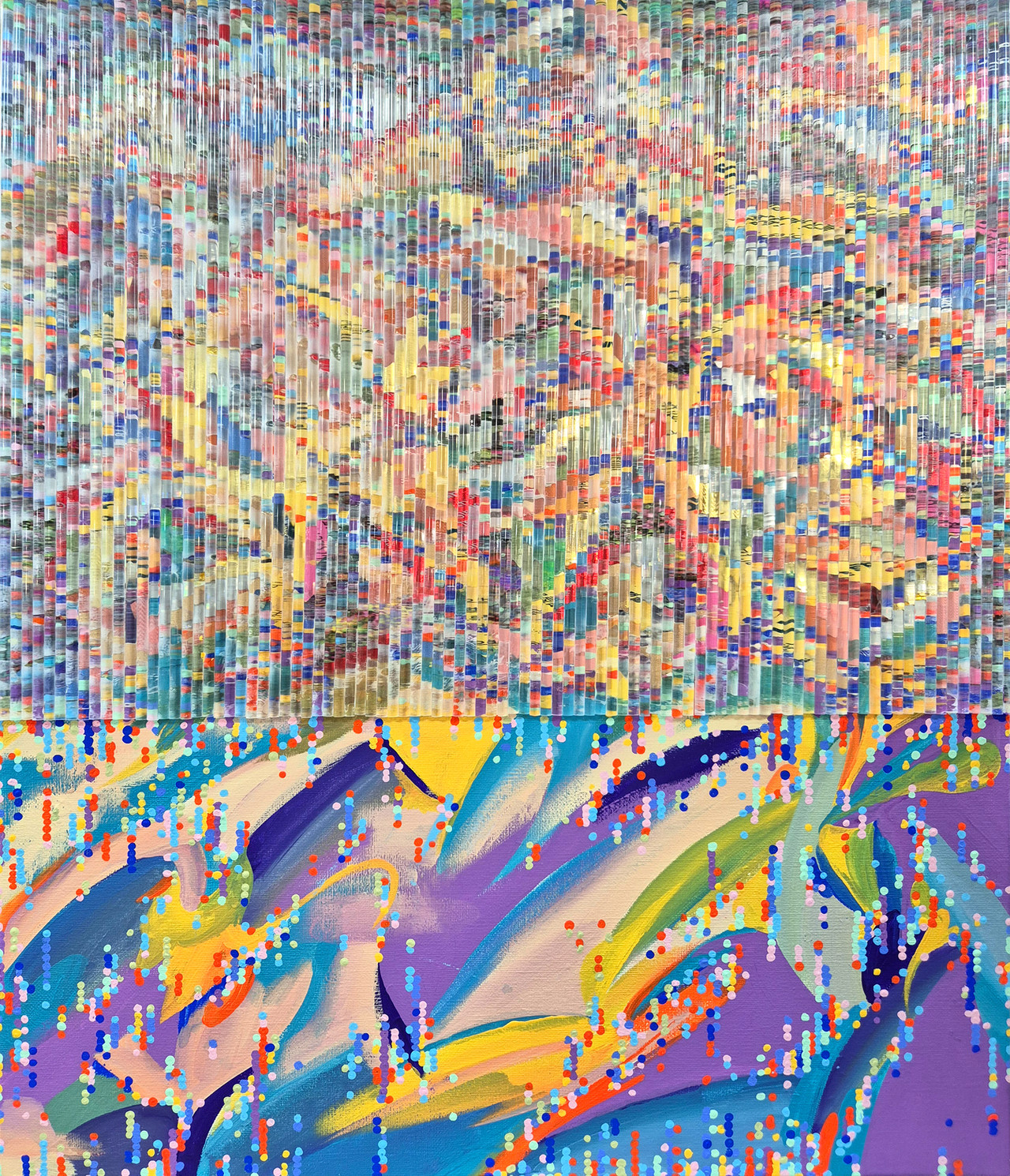
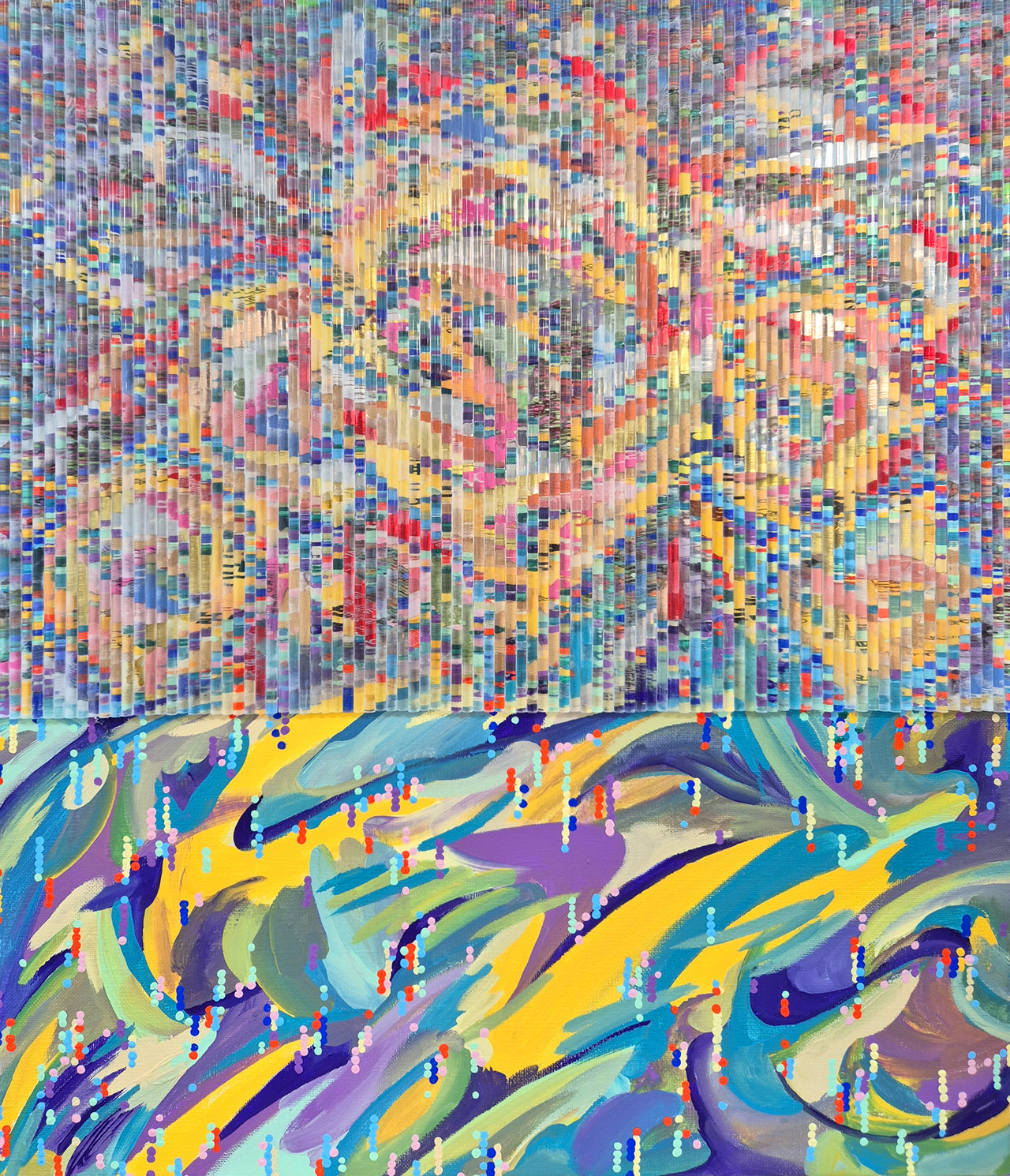
이어진 시리즈 작업 《SIM_Visibility》에서는 불투명한 콜라주의 상단부 아래로 추상 점묘의 하단부가 펼쳐진다. 이 점묘는 단순한 회화적 기법이 아니다. 디지털 세계의 가장 작은 단위인 픽셀을 손으로 찍어낸 것으로, 화면은 페인팅이면서 동시에 픽셀 아트의 감각을 품는다. 디지털로 시작된 이미지가 콜라주로 환생하고, 다시 아날로그 점묘 위에서 디지털의 언어로 되돌아오는 이 순환은, 심모비의 작업 안에서 형식 자체가 세계관을 담아내는 방식이다.
이번 전시 《연옥의 심상 SIM_Imagery》는 그 흐름 위에서 한 걸음 더 나아간다. 음악이 무형의 디지털 파일로 저장되면서도 듣는 이의 기억(이미지)과 감정을 끌어올리듯, 그의 화면은 형태 없는 '연옥'이 어떻게 감각으로 도달하는지를 조용히 보여준다. 이전의 작업들이 연옥 세계로부터 오는 감각 자체에 집중했다면, 이번 전시는 그 감각이 인식하는 주체를 통과하며 어떻게 구체적인 이미지로 형성되는가를 묻는다. 심상이란 그 사이의 간극에서 태어나는 산물이다. 외부의 현상이 기억과 상상력을 거쳐 의식 속에 재구성될 때, 실제 대상도 순수한 관념도 아닌 어딘가에서 떠오르는 필터링된 잔상이자, 보이지 않는 것을 보이게 만드는 매개체이다.
시리즈 작업 《SIM_Imagery》에서 하단부의 추상 점묘는 처음으로 구상적인 풍경으로 전개된다. 불투명함으로 시작된 감각이 잔상이 되고, 잔상이 이미지가 되고, 이미지가 풍경의 형태로 펼쳐지는 것이다. 이는 특정한 장소의 재현이 아니라, 보이지 않는 세계가 조금씩 윤곽을 얻어가며 그 환생의 순간에 닿는 과정이다.
심모비의 모든 작업들은 이처럼 서로 이어져 있다. 스케치에서 디지털 드로잉으로, 디지털 드로잉에서 콜라주로, 콜라주에서 점묘로, 점묘에서 풍경으로. 각각의 형식은 이전 작업의 다음 생이자, 다음 작업의 전생이다. 심모비는 이 순환을 '회화의 윤회'라 부른다. 《연옥의 심상 SIM_Imagery》는 그 윤회의 현재 지점이다.
이번 전시는 보이지 않는 세계에 대한 설명이 아니다. 그 세계가 남긴 잔상이 어떻게 심상으로 떠오르고 하나의 이미지로 형성되는지를, 보는 이로 하여금 각자의 방식으로 천천히 경험하게 하는 자리이다. 그 경험 속에서 누군가는 자신만의 '연옥'과 마주하게 될지도 모른다.
- 유나혜 (히피한남 갤러리 큐레이터)
How can we depict a world that cannot be seen?
If it cannot be described directly, what remains may be the traces it leaves within us. SIM_Moby's practice begins with this question, tracing the images that arise in the space between sensation and perception.
The artist's practice is grounded in a single insight: "To bring one life into existence is also to bring about a death." Within this cycle, SIM_Moby does not understand purgatory simply as a place between heaven and hell. For the artist, purgatory is a space before birth, a suspended realm where the order of life and death has not yet begun. It is a world that resists proof and full perception, accessible only in fragments and always partially obscured.
This understanding is closely connected to the material language of the work. In the SIM_Opacity series, Sim Moby brings digital drawings, the foundation of the artist's visual identity, onto the canvas. These images are printed, cut, rearranged, and transformed into collage, creating a new space of SIM_Purgatory. Like a life that does not end in a single form but is reborn through another body, one work becomes the material and life of the next. The acrylic sticks layered on the surface refract light differently depending on the viewer's position, allowing the image to appear only partially. The work does not explain purgatory; it enacts the conditions of sensing it.
In the following series SIM_Visibility, abstract pointillist painting appears beneath the opaque collage. These dots are more than a painterly gesture. They recall the pixels that form digital images, allowing the work to exist between painting and pixel art. An image that began digitally is reborn as collage, then returns to a digital sensibility through hand-painted dots. Within SIM_Moby's practice, form itself becomes a vehicle for worldview.
The artist refers to this ongoing process as the "reincarnation of painting." SIM_Imagery moves one step further within this cycle. Like music stored as an intangible digital file yet capable of surfacing images, memories, and emotions, SIM_Moby's paintings quietly show how the formless world of SIM_Purgatory can reach us through sensation. If the previous works focused on the sensory presence of purgatory itself, this exhibition asks how that sensation is shaped into image. Imagery is what emerges in the gap between the two: an external phenomenon reconstituted through memory and imagination, neither the thing itself nor pure idea, but a filtered trace that makes the invisible visible.
In the SIM_Imagery series, the abstract pointillist lower section develops into figurative landscapes for the first time. A sense of opacity becomes a trace, the trace becomes an image, and the image unfolds as a landscape. These are not depictions of specific places, but moments in which an unseen world slowly takes form, reaching at last the instant of its own reincarnation.
Rather than explaining the unseen world, this exhibition invites viewers to experience how its traces rise as imagery and take shape as image, each in their own way and at their own pace. Within that experience, each viewer may find themselves facing a purgatory of their own.
- Nahye Yu (Curator, Hippie Hannam Gallery)
Artwork (대표작)
Installation View
Magazine & Press & Review