


NEO JOSEON
보얀 젤렌쇼브스키
Boyane Zelechowski
2026. 08. 26 ~ 2026. 09. 19
Introduction 서문
익숙했던 감각 위로 낯선 문화가 겹쳐지고 마침내 자신의 일부가 될 때, 그로부터 태어난 세계는 어디에 속하게 될까. 보얀 젤레쇼브스키의 《NEO JOSEON》은 서로 다른 문화가 오랜 시간 축적되고 스며들며, 이전에는 존재하지 않았던 또 하나의 세계를 만들어가는 과정에서 출발한다.
프랑스에서 그래피티와 유럽 만화, 일러스트레이션의 시각 언어를 익힌 보얀에게 변화는 의도보다 먼저 찾아왔다. 한국에 정착해 생활하며 자연과 미술, 일상의 시각문화를 지속적으로 마주하고 서예붓을 사용하기 시작하면서 그의 선과 색, 화면의 구성은 조금씩 달라졌다. 주변의 동료들이 먼저 그의 그림에서 한국적인 감각을 발견했고, 작가 역시 뒤늦게 그 변화를 인식하게 된다. 그는 이를 한국의 문화가 “먹이 종이에 번지듯” 자신의 작업 안으로 스며든 과정이라 말한다.
이러한 변화는 이후 의식적인 탐구로 이어졌다. 보얀은 사찰과 공예박물관을 찾고 단청과 한복, 전통 공예를 살펴보며 조선의 형태와 문양, 사물들을 수집했다. 그는 그렇게 축적한 이미지들을 언제든 꺼내 사용할 수 있는 머릿속의 ‘시각적 도서관(visual library)’이라 부른다. 한국에서 체화한 감각과 전통의 이미지들은 그의 기억과 상상을 통과해, 프랑스에서부터 품고 있던 그래피티와 유럽 만화의 언어와 새로운 관계를 맺는다.
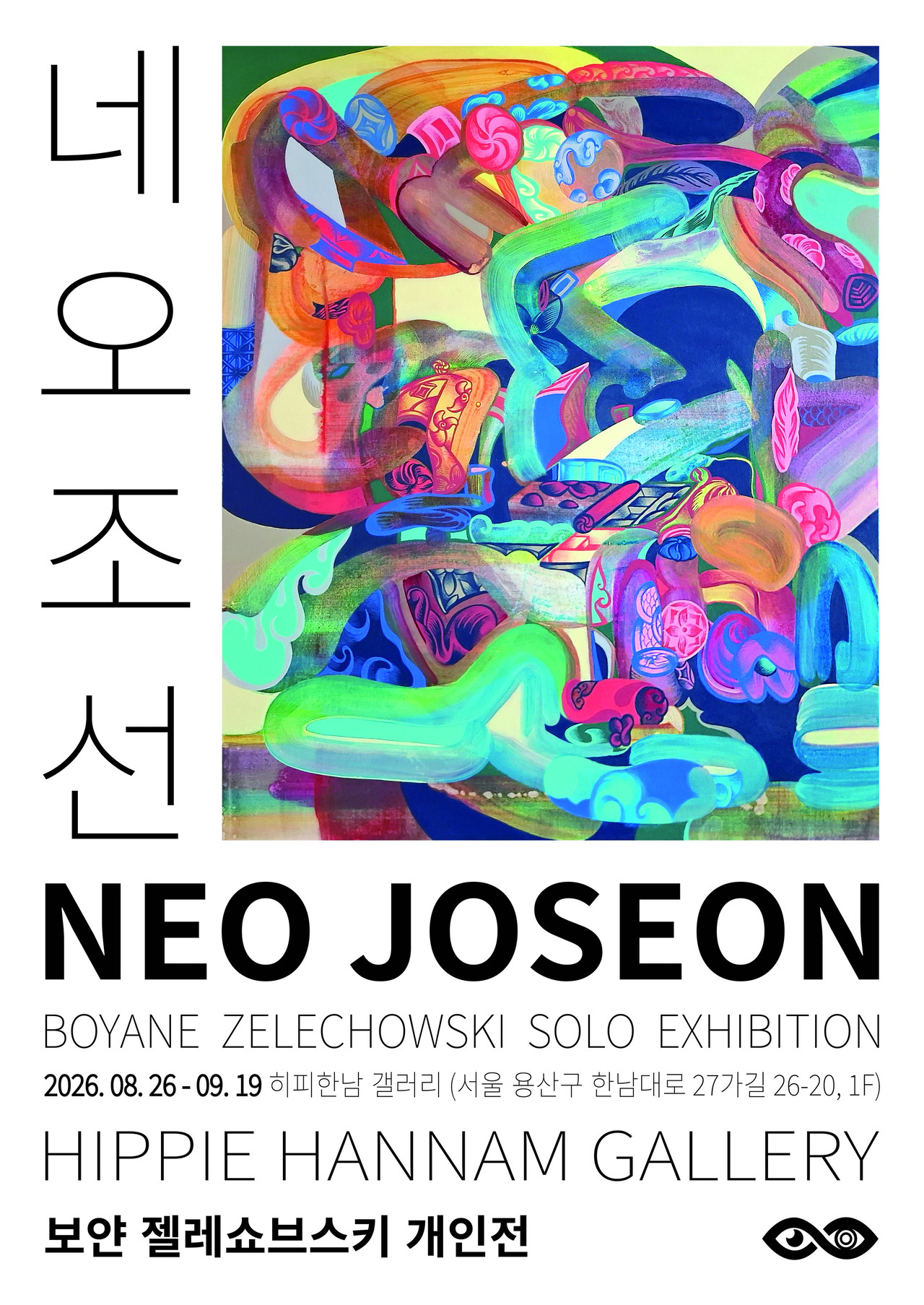
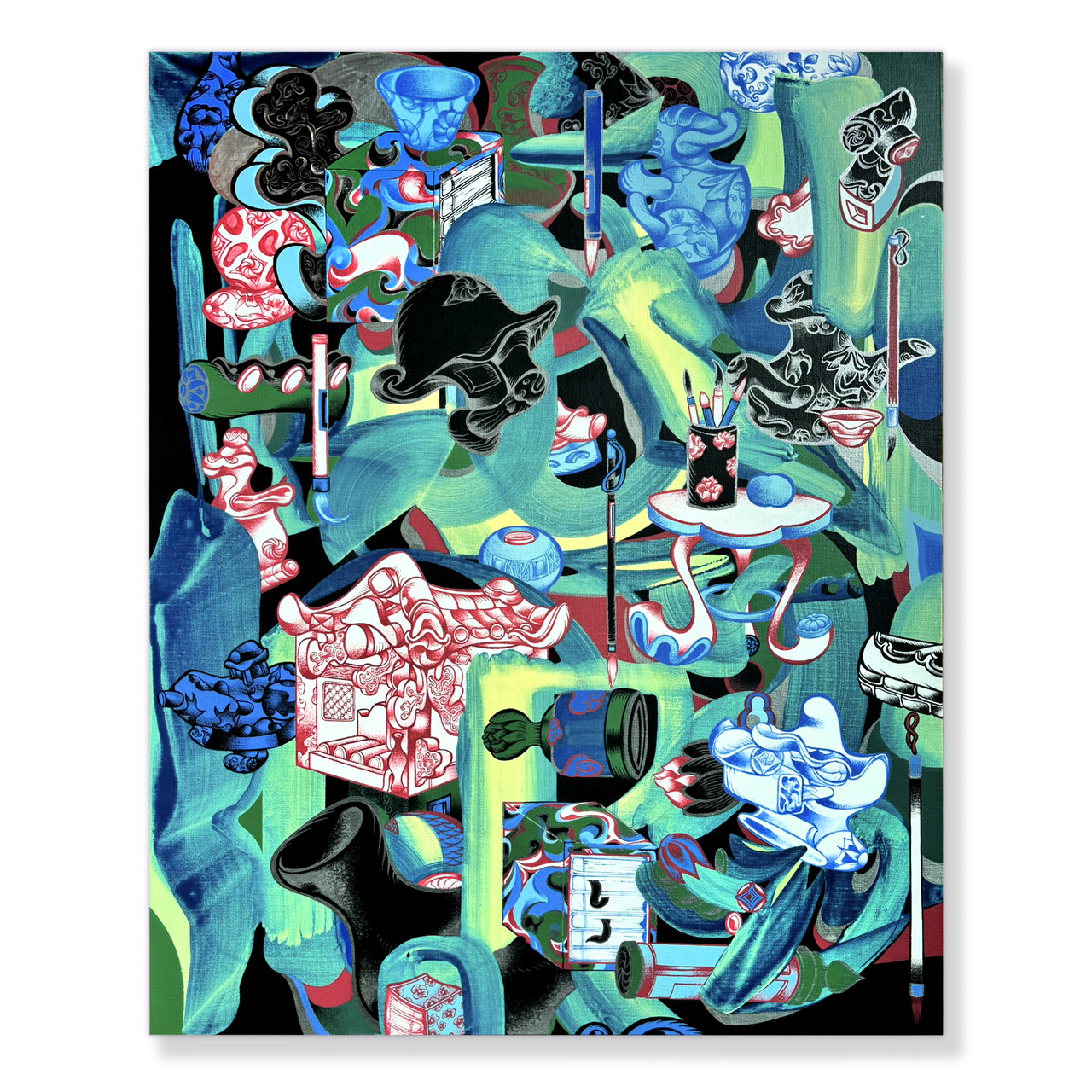
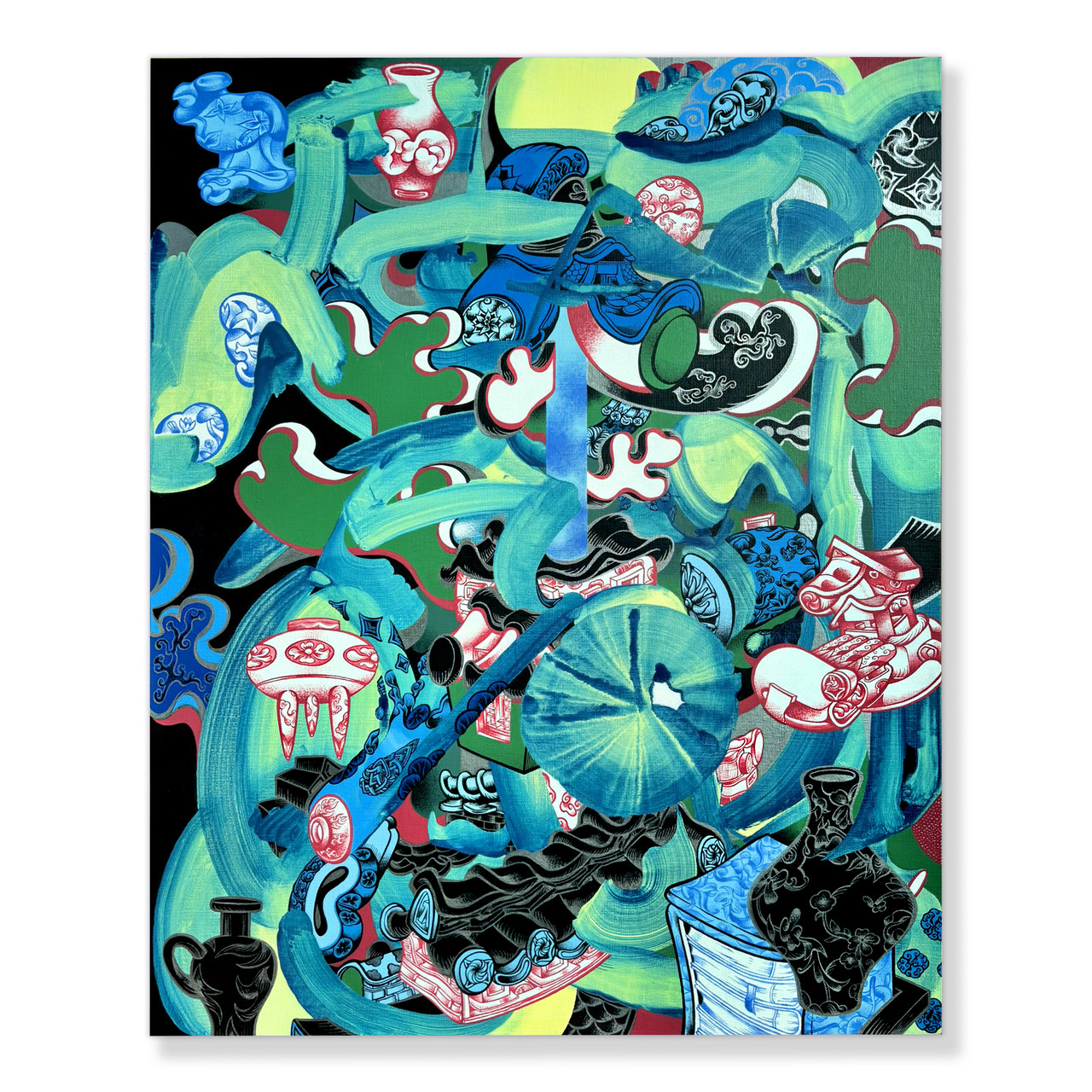
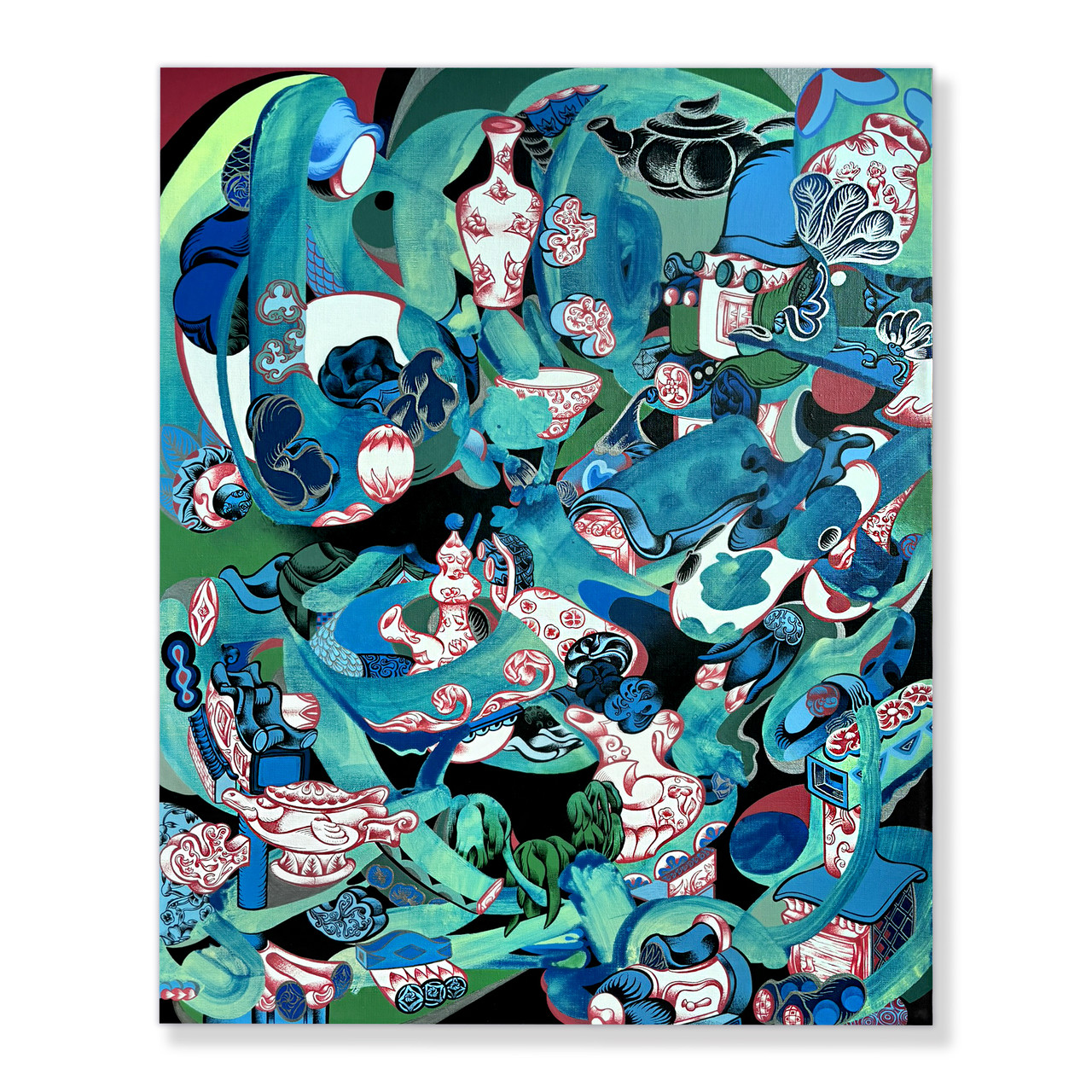
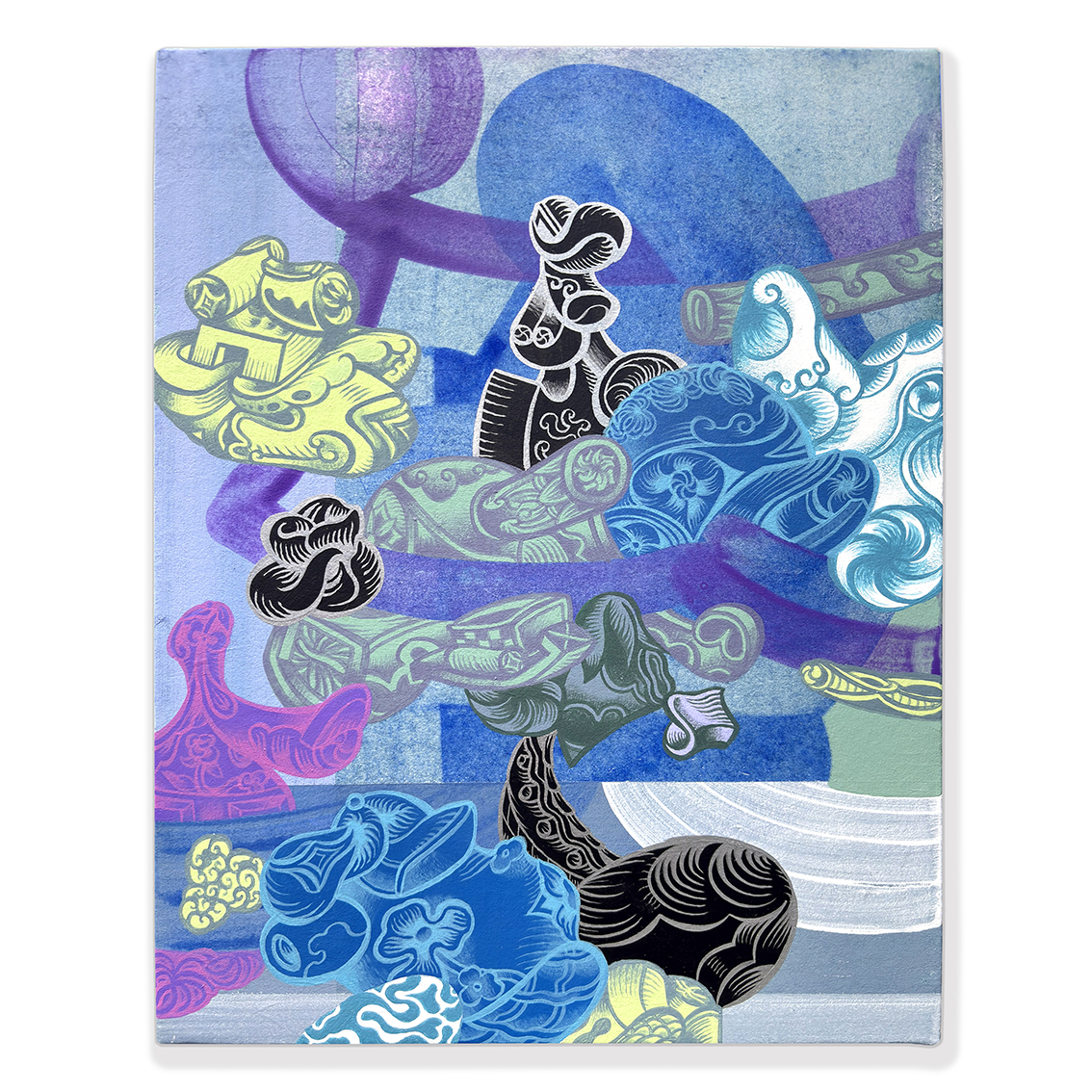
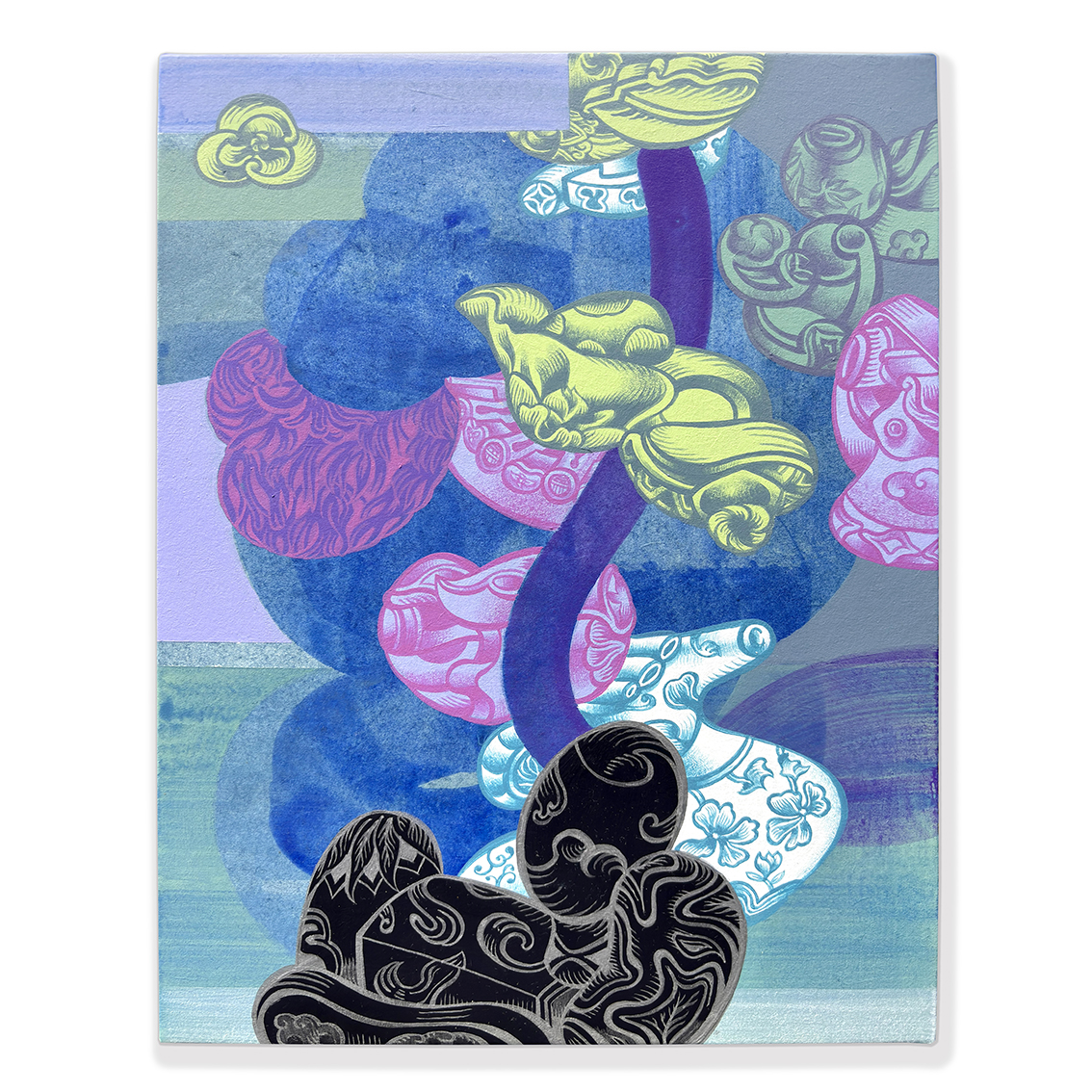
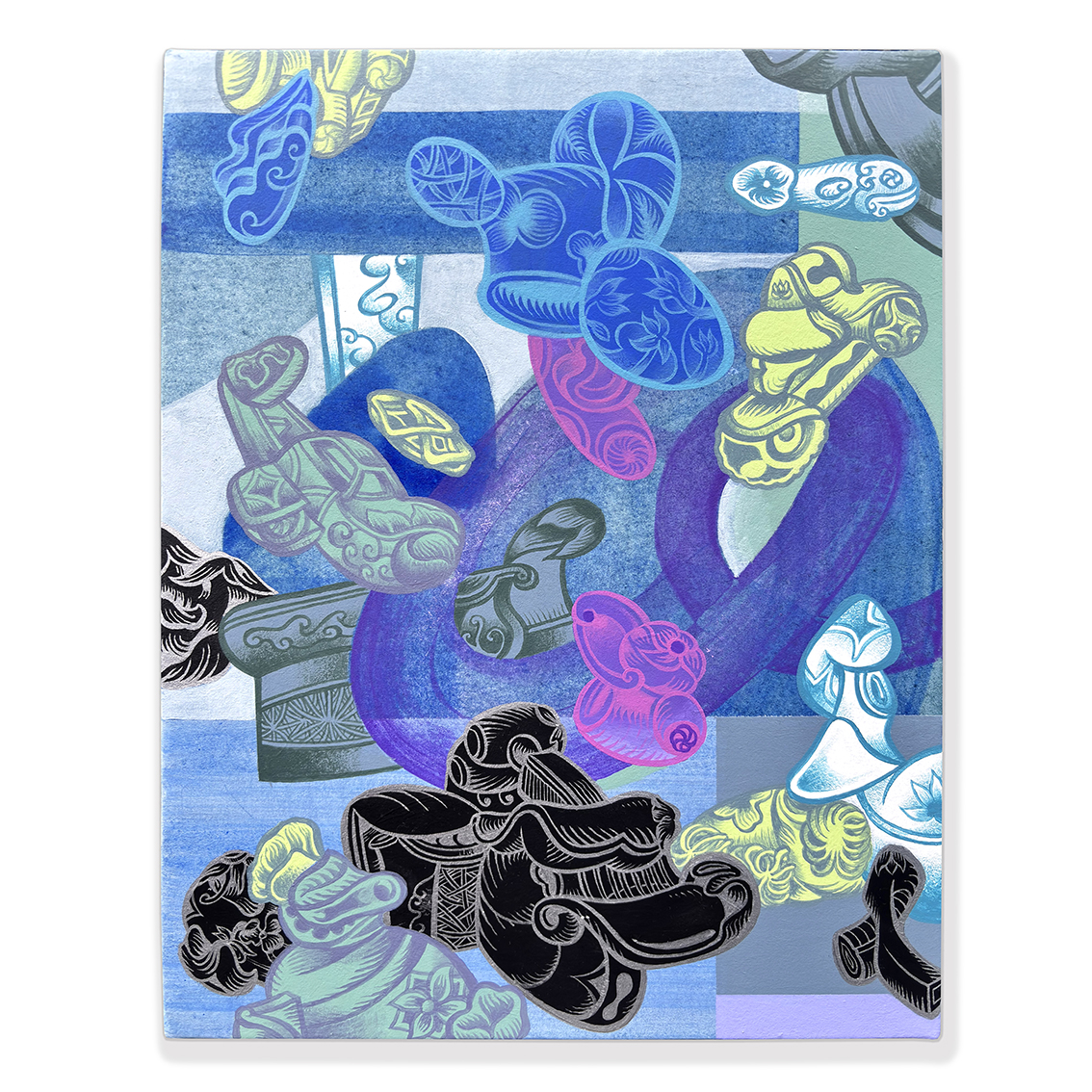
화면 곳곳에는 전통적인 도자기와 병, 단청을 연상시키는 색과 장식, 구름과 파도, 꽃과 식물의 문양이 등장하고, 그 사이를 만화적인 형상과 그래피티에서 비롯된 유동적인 선이 자유롭게 가로지른다. 서로 다른 시공간에서 건너온 요소들은 서로를 가리고 감싸며 때로는 전혀 다른 형상으로 이어진다. 이들은 특정한 시대나 장소를 재현하기보다 ‘NEO JOSEON’이라는 세계를 이루는 파편이자 그곳을 구성하는 각각의 유기체처럼 존재한다. 시선은 하나의 중심에 머물지 않고 이미지와 이미지 사이를 끊임없이 이동한다. 보얀이 각각의 작품을 영화나 교향곡에 비유하듯, 고요한 부분과 폭발적으로 밀집된 부분, 크고 작은 형태와 선의 반복과 변주는 화면에 서로 다른 속도의 리듬을 만든다. 하나의 캔버스를 바라보는 일은 그렇게 여러 장면과 시간을 통과하는 하나의 시각적 경험이 된다.
이러한 화면은 작가의 제작 방식에서도 이어진다. 거리의 벽에서 익힌 그래피티의 즉흥적이고 신체적인 에너지는 캔버스로 옮겨오며 보다 느리고 집요한 과정과 만난다. 원하는 채도와 색의 대비를 얻기 위해 여러 차례 색을 쌓고, 작은 면과 선 하나까지 세밀하게 조율한다. 여기에 서예붓은 그가 오랫동안 다뤄온 선에 또 다른 움직임과 호흡을 더한다. 빠른 제스처와 느린 축적, 즉흥성과 통제는 화면 안에서 공존하며 보얀만의 회화적 리듬을 만들어낸다. 이러한 리듬을 바탕으로 형성된 세계를 그는 ‘NEO JOSEON’이라 이름 붙였다.
여기에서 조선의 형태와 문양은 과거를 지시하는 기호로 머무르지 않는다. 현재를 살아가는 작가의 손을 거치며 다시 움직이고 변형되어, 아직 존재하지 않는 사물과 풍경을 만들어내는 재료가 된다. 과거의 조형언어가 현재의 감각 안에서 다시 생명력을 얻고, 동시대의 새로운 장면으로 이어지는 것이다. 그런 의미에서 ‘NEO JOSEON’은 서로 다른 문화를 한 화면에 병치한 결과라기보다, 과거와 현재가 끊임없이 관계 맺으며 생성되는 하나의 확장된 세계관에 가깝다.
이곳에서 과거는 고정된 시간에 머무르지 않고, 현재의 감각 속에서 끊임없이 새롭게 작동한다. 작품 하나가 더해지고 작가의 경험이 축적될 때마다 새로운 형상과 장면이 태어나며, 그 세계의 모습 역시 계속해서 변화한다. ‘NEO JOSEON’은 그렇게 이미 존재했던 세계로부터 출발해 현재와 함께 살아 움직이며, 지금도 계속 만들어지고 있다.
- 유 나 혜 (히피한남 갤러리 큐레이터)
When an unfamiliar culture overlays a familiar sensibility and eventually becomes part of it, where does the world born from that encounter belong? Boyane Zelechowski’s NEO JOSEON begins with this question. It traces how different cultures accumulate over time and give rise to a world that did not exist before.
Boyane developed his visual language through graffiti, European comics, and illustration in France. Yet change came before intention. After settling in Korea, encounters with its nature, art, and everyday visual culture gradually began to shape his work. The use of Korean calligraphy brushes also changed his lines, colors, and compositions. Fellow artists noticed a Korean sensibility in his paintings before he did. Boyane describes this process as Korean culture seeping into his practice “like ink spreading through paper.”
What began unconsciously developed into deliberate exploration. Boyane visited temples and craft museums, studying dancheong, hanbok, and traditional crafts while collecting forms, patterns, and objects from the Joseon era. He calls this collection a “visual library” in his mind. These images pass through his memory and imagination, forming new relationships with the graffiti and European comics he has carried with him from France.
Traditional ceramics and vessels, colors and ornamentation reminiscent of dancheong, and patterns of clouds, waves, flowers, and plants appear throughout his paintings. Comic-inspired forms and fluid lines rooted in graffiti move freely among them. Elements from different times and places overlap and flow into new forms. Rather than depicting a particular period or place, they exist as fragments of NEO JOSEON and as living elements within its world. The eye moves constantly between images. Boyane compares each painting to a film or a symphony. Quiet passages and densely packed, explosive moments create different rhythms across the canvas. Looking at a single painting becomes a visual experience that moves through multiple scenes and moments.
This rhythm also extends into Boyane’s process. The spontaneous and physical energy of graffiti meets a slower, more meticulous approach on canvas. He builds up layers of color to achieve the desired saturation and contrast, carefully refining even the smallest areas and lines. Korean calligraphy brushes bring a distinct movement and breath to his line. Fast gestures and slow accumulation, spontaneity and control coexist within the same painting. Boyane calls the world formed through this pictorial rhythm “NEO JOSEON.”
Here, the forms and patterns of Joseon are not simply signs of the past. Through the hand and sensibility of an artist working in the present, they take on new life and become material for forms and scenes that did not exist before. The visual language of the past gains new vitality and unfolds into contemporary scenes. In this sense, NEO JOSEON is not merely the result of juxtaposing different cultures. It is an expanding world generated through an ongoing relationship between past and present.
The past does not remain fixed in time. With each new work and each experience the artist accumulates, new forms and scenes emerge, and the world itself continues to change. NEO JOSEON begins with a world that has already existed, yet lives and moves alongside the present. It is still being made.
- Nahye Yu (Curator, Hippie Hannam Gallery)
작가노트 Artist Note | 보얀 젤렌쇼브스키 Boyane Zelechowski
2015년 무렵부터는 캔버스에 그림을 그리기 시작했습니다. 뚜렷한 계획 없이 한 점씩 작업을 쌓아가며 캔버스 위에서 자신감을 키우고, 저만의 스타일을 찾아갔습니다.
한국에서 생활하는 동안 저는 한국화와 건축, 그리고 그 안에서 사용되는 도구와 예술적 양식에 늘 호기심을 느꼈습니다. 그러면서 벽과 캔버스에 선을 그릴 때 한국의 서예용 붓을 사용하기 시작했습니다. 시간이 지나자 한국과 프랑스의 친구들은 제 스타일이 변하고 있으며 점점 더 동양적으로 보인다고 이야기하기 시작했습니다. 당시에는 미처 깨닫지 못했지만, 저는 어느새 한국의 조형적 기호와 색감, 자연을 그리는 방식에 자연스럽게 스며들고 있었습니다.
한지에 먹이 스며들듯, 한국 미술의 양식은 이미 제 안에 스며들어 있었습니다. 그래서 저는 고민 끝에 이러한 한국의 영향을 온전히 받아들이기로 했습니다.
"한국 미술에 나만의 감각을 더해보면 어떨까?" 저는 사찰과 단청, 한복을 공부하고 관련 서적을 읽었으며, 공예 박물관을 찾아다녔습니다. 그렇게 조선 시대의 형태와 문양으로 이루어진 시각적 도서관을 제 머릿속에 쌓아갔습니다. 저는 이 스타일을 '네오 조선(Neo Joseon)'이라 이름 붙였습니다.
'네오 조선'은 한국의 전통 예술과 공예를 저만의 방식으로 재해석하고, 여기에 저를 가장 잘 보여주는 두 가지 요소인 일러스트레이션과 그라피티를 결합한 작업입니다. 일러스트레이션의 요소는 제가 그리는 문양과 도자기, 사찰, 식물 그리고 선을 통해 드러납니다. 그라피티의 요소는 서예 붓의 획을 통해 표현됩니다. 이는 순간적으로 분출되는 거칠고 빠른 에너지입니다.
네오 조선은 새로운 디자인을 실험하는 실험실이자, 과거와 미래가 공존하며 새로운 작품이 더해질 때마다 계속해서 성장하는 판타지 세계입니다. 그 안에는 레트로퓨처리즘적인 감성이 담겨 있으며, 미래의 기술과 조선의 건축이 하나의 세계 안에서 공존합니다. 빅토리아 시대의 요소를 결합한 스팀펑크나 고대 이집트를 배경으로 한 《스타게이트》를 떠올리시면 됩니다. '네오 조선'이라는 이름 또한 '네오 도쿄'를 배경으로 한 오토모 가쓰히로의 《아키라》에 보내는 작은 헌사입니다.
네오 조선은 저에게 여러 의미를 지닙니다. 한국의 시각적 어휘를 배우고, 그 과정을 통해 제가 태어나지 않은 문화를 발견하는 일입니다. 또한 저를 받아주고 이곳에서 가정을 이룰 수 있게 해준 한국에 경의를 표하며, 예술을 통해 그 마음을 돌려드리는 일이기도 합니다. 그리고 유럽과 아시아 사이에서 오랫동안 이어져 온 문화 교류의 역사 속에서 동양과 서양의 대화를 새롭게 열어가는 일이기도 합니다.
저는 한국 미술에 새로운 향신료를 더하고 싶습니다. 제가 자라온 문화로 인해 한국을 바라보는 저의 시선은 자연스럽게 변형될 수밖에 없습니다. 저에게 한국은 어느 정도 환상적인 요소를 지니는데, 이는 한국인들이 프랑스와 유럽에 대해 이상화된 이미지를 가질 수 있는 것과도 비슷합니다. 한국인들에게는 평범하고 익숙한 것들이 저에게는 보물처럼 다가오기도 합니다.
저는 앞으로도 여러 해에 걸쳐 이 작업 세계를 계속 쌓아가며 스스로에게 도전하고, 네오 조선의 스타일을 더욱 발전시키고 싶습니다. 전시를 찾은 관람객들이 작품을 보며 놀라움을 느끼는 동시에, 익숙한 세계와 낯선 어딘가에 함께 머무는 듯한 감각을 경험하기를 바랍니다. 네오 조선과 함께 우리는 한국을, 미래를, 그리고 예술을 만드는 기쁨을 기립니다.
보얀, 2026
I arrived in Korea around 2012. Before that, in France, I worked in illustration and comic books, and started graffiti at 16, in 2000. Drawing and graffiti were the two disciplines where I first developed my style, and they both continued to shape my work once I settled in Korea.
Around 2015 I began painting on canvas, accumulating pieces one by one without a fixed plan, learning to be confident on the canvas and to find a style.
While living here, I always been curious about Korean painting, the architecture including its tools and artistic styles, I started to use calligraphic Korean brushes for my lines on walls and canvas. Gradually, friends here and in France began telling me that my style was changing and looking more Asian. I didn't realize it, i had unconsciously adapted to Korean taste, including its graphic codes, colors, and nature-drawing themes.
The Korean art styles already infused in me like the ink infusing the paper. So, after thinking about it, I decided to embrace this Korean influence fully.
"How about trying to make Korean art, but with my own touch?" I studied temples, dancheong painting, hanboks, read books and visited craft museums for building a visual library of Joseon-era shapes and patterns in my mind. I called this style Neo Joseon.
"Neo Joseon" is my reinterpretation of the traditional Korean arts and crafts blended with the two things who represent me the most: The Illustration and the Graffiti. Illustration part is expressed with the patterns, ceramics, temples, plants, and lines I draw. Graffiti is expressed by the calligraphy brush strokes, this wild and quick energy of the instant.
It is a laboratory of new designs, a fantasy world where future and past coexist and keep growing with every new piece. Neo Joseon carries a retro futurist touch, a technologic and Joseon architecture, like the Steampunk is with Victorian elements, or Stargate with ancient Egypt. The name is also a nod to Katsuhiro Otomo's Akira, set in 'Neo-Tokyo'.
Neo Joseon has several meanings for me. It is about learning Korea's visual vocabulary and, through that, discovering a culture I was not born into. It is also paying homage to a country that welcomed me and let me build a family here, and giving back through my art. And it is about opening a dialogue between East and West, in continuity with the long history of cultural exchange between Europe and Asia.
I want to bring different spices into the Korean Art. My vision of Korea is naturally distorted by the culture I grew up in, and Korea, to my lens, carries an element of fantasy, much as Koreans may hold an idealized image of France and Europe. Normal Korean things can be treasures for me.
I wish to keep building this body of work over the years, to challenge myself and develop the Neojoseon style. I hope the public visiting the exhibition will be surprised, feel familiar with the painting and somewhere else at the same time. With Neo Joseon, we celebrate Korea, the future, and the joy of making art.
Boyane. 2026
Artworks
Installation View
Press